When selecting foam materials for industrial applications, engineers often face a choice between polyurethane (PU) foam and silicone foam. Both materials offer unique properties and advantages, but understanding their differences is crucial for optimal performance and cost-effectiveness.
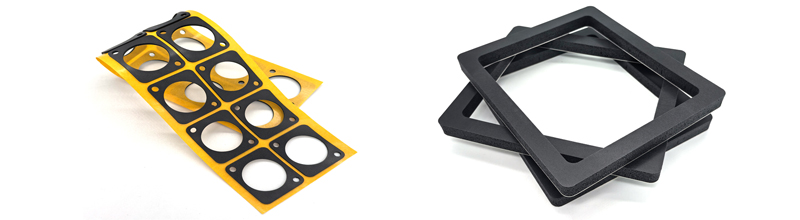
Material Properties Comparison
PU foam and silicone foam exhibit distinct characteristics that make them suitable for different applications:
| Property | PU Foam | Silicone Foam |
|---|---|---|
| Temperature Resistance | -40°C to 100°C | -60°C to 200°C |
| Compression Set | 10-20% | 5-15% |
| Density Range | 20-300 kg/m³ | 30-250 kg/m³ |
| Chemical Resistance | Moderate | Excellent |
| Flame Resistance | Good (with additives) | Excellent |
| Cost | Lower | Higher |
Key Differences
Temperature Performance
Silicone foam offers superior temperature resistance, making it ideal for applications involving extreme heat or cold. Its stable properties across a wide temperature range (-60°C to 200°C) ensure consistent performance in demanding environments.
Key Insight: Temperature Stability
Silicone foam maintains its flexibility and mechanical properties across a wider temperature range than PU foam, making it the preferred choice for applications with significant thermal cycling.
PU foam, while more limited in its temperature range (-40°C to 100°C), provides excellent performance for standard industrial applications at a more economical price point.
Compression Set and Recovery
Compression set refers to a material's ability to return to its original thickness after being compressed. Both PU and silicone foams offer good recovery characteristics, but silicone typically demonstrates slightly better performance with compression sets of 5-15% compared to PU's 10-20%.
Cost Considerations
While silicone foam typically costs more than PU foam, its extended service life in demanding applications often results in lower total cost of ownership. For less demanding applications, PU foam provides excellent value and performance.
Cost Consideration
PU foam is generally 30-50% less expensive than silicone foam, making it the preferred choice for cost-sensitive applications where extreme conditions are not a factor.
Summary
The choice between PU foam and silicone foam ultimately depends on your specific application requirements:
- PU Foam is ideal for standard industrial applications with moderate temperature and chemical exposure, offering excellent performance at a lower cost.
- Silicone Foam is superior for demanding environments with extreme temperatures, chemical exposure, or stringent flame resistance requirements, despite its higher initial cost.
Our technical experts at Biscotech Solutions are available to help you evaluate your specific application needs and recommend the most appropriate material solution.
Contact Our Experts